
Author

Denny White

Browsing

You’re curious about asset-backed loans, aren’t you? These financial tools rely on your company’s assets as collateral. They can breathe life into struggling businesses or fuel expansion for the ambitious ones.

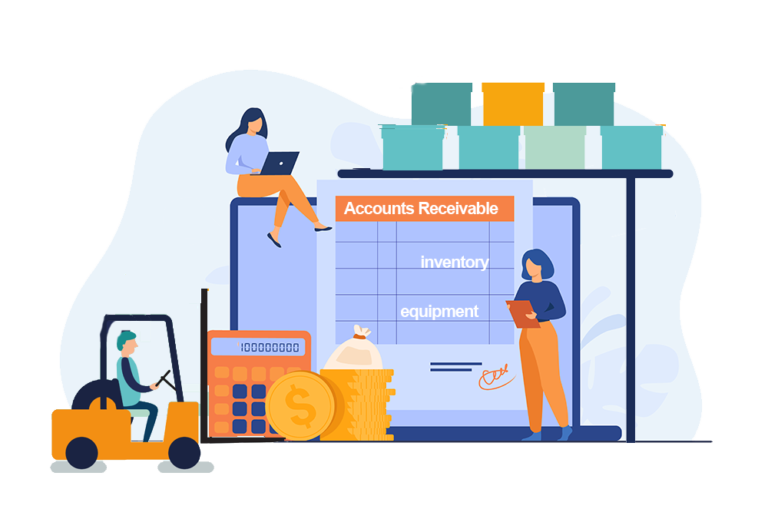
Simply put, lending institutions provide funds against equipment, inventory, accounts receivable, and other tangible things of value to your business operation. This path may have pitfalls if not navigated wisely.

Key Features of Asset-Backed Loans

An asset-backed loan utilizes your business assets as collateral, providing a flexible and fast way to secure funding. You get access to capital without selling any of these treasured properties. Conversely, remember that if payments are not made, the lender may claim them.

Owning significant inventory or accounts receivable opens up an avenue for you in this type of lending. It’s useful when quick expansion is needed or during cash flow emergencies. Asset-based loans can also rely on several types of assets combined, broadening their accessibility.

These loans present fewer restrictions with regard to fund usage, provided they go towards legitimate business activities. Another key highlight lies in their flexibility; as long as your fixed assets continue to appreciate in value, these institutions may offer additional funding as well.

Escape from high costs associated with alternatives like factoring through attractive lower APRs tied in here! However, be mindful that some terms do exclude certain valuable possessions from qualifying. So, keep tabs on what qualifies before opting for one!

Benefits and Risks of Asset-Backed Loans

Asset-backed loans offer a valuable credit source when traditional options fail you. Your company secures funds for various needs using collateral like equipment or inventory. The main boon is that such lending depends more on the assets’ value than your credit history.

If poor scores limit access to capital elsewhere, this can seem like striking gold! Furthermore, they often allow businesses larger sums as lenders prefer big-ticket borrowing due to equal monitoring costs across all loan sizes.

However, be aware of risks associated with asset-backed financing, too. If the payment can’t be made, then what gets put at risk is the property that was pledged. This could range from expensive machinery to something as small as a skeleton in a storeroom closet. It’s important not to overlook these potential risks!

Requirements for an Asset-Backed Loan

To qualify for an asset-backed loan, you must meet certain eligibility standards. Firstly, your business should have assets of significant value that can be used as collateral. These could include anything from real estate properties or manufacturing equipment to unpaid invoices (known as receivables). The condition and age of these are also taken into account when considering their worth.

Secondly, financial institutions might require a detailed record detailing your company’s financial status and performance history. In addition to this, an outlook on profitability forecasts can help persuade lenders about future repayment capacities. A good credit score can reduce the risk of defaulting on payments, increasing the chances of loan approvals.

Remember: Research thoroughly before committing any significant assets against borrowed funds. Consult independent experts if necessary, so there are no unexpected forfeitures later down the line!

Types of Assets Used to Secure a Loan

Exploring the types of assets used to secure a loan? There are several categories. Accounts receivable, inventory, and equipment are the most common among them. These tangible items form part of your business collateral, assuring lenders that you have real-world resources if payment issues arise.

Accounts receivable are popular choices due to their liquidity; they’re essentially money owed by customers yet to be paid into your cash flow system.

Inventory refers broadly to any stock on hand for businesses distributing physical products or services. These may be materials and objects, such as in restaurants. Equipment includes machinery and heavy-duty tools that are vital for specific industries, like construction machines at building sites or kitchen appliances within eateries.

The asset type influences the terms and conditions of loans because each has unique value degrees affecting its liquidation process–the conversion step from property back into currency.

Common Uses for an Asset-Backed Loan

Consider why you would apply for an asset-backed loan. Maybe your business has a hefty purchase order to fill but lacks the cash flow.

You might need additional capital to bridge a gap in sales during certain times of the year or to update your inventory before peak season. Taking out an asset-backed loan can be beneficial if traditional financing is not feasible due to past financial issues that have caused a lower credit score.

Unlike other loans, lenders focus on collateral value more than creditworthiness with these types of loans. A significant point worth noting is how borrowers utilize this type of funding during mergers and acquisitions, too!

This flexible finance option can fund expansions without diluting existing shareholders’ stakes in the company. Remember, though, while it offers practical solutions across diverse scenarios, mismanagement may lead to the loss of valuable assets pledged as collateral, such as property or equipment used every day by businesses.

Regulatory Environment Surrounding Asset-Backed Lending

Turning to the regulatory environment, asset-backed lending falls under close scrutiny. Government agencies ensure lenders maintain fair practices and protect borrowers’ rights. Both federal and state regulations do this.

The Dodd-Frank Act plays a significant role at the federal level, ensuring transparency, among other things. Additionally, individual states have their own set of guidelines for this type of financing option. As you consider an asset-backed loan, familiarize yourself with pertinent industry rules like the Uniform Commercial Code (UCC).

The UCC sets out standards concerning secured transactions across most US jurisdictions, promoting consistency in handling these loans. The Consumer Financial Protection Bureau also has oversight here, ensuring consumer interests are safeguarded during financial dealings involving such products as loans backed by assets.

Understanding these laws helps ward off unpleasant surprises down the line of your borrowing journey, ensuring smooth sailing through repayment until full settlement occurs and avoiding potential pitfalls along the way!

Asset-backed loans leverage your company’s assets for financial gain. Assets, including equipment or inventory, secure these loans. You get immediate cash flow with Blake Mortgage at competitive interest rates to bolster your business operations without hassle.

Remember, asset-backed loans offer a promising solution if used skillfully.

In the dynamic world of business, change is not only inevitable but also necessary for growth and success. However, navigating through this change can be challenging for many organizations. This is where Business Coaching Services come into play, acting as a catalyst to facilitate and drive effective organizational change.

Understanding the Role of Business Coaching Services

At its core, business coaching involves working with individuals or teams within an organization to improve performance, develop skills, and achieve goals. A business coach is like a mentor who provides guidance, support, and constructive feedback to help businesses identify their strengths and weaknesses and devise strategies for improvement.

Coaching services can be particularly beneficial during periods of organizational change, providing the direction and support needed to manage the transition effectively.

Facilitating a Clear Vision and Strategy

One of the key roles of a business coach during organizational change is facilitating a clear vision and strategy. Change can often lead to uncertainty, and without a clear vision, it can be challenging for businesses to move forward.

A business coach helps define and articulate this vision, aligning it with the organization’s overall goals and objectives. They also assist in developing a strategic plan to achieve this vision, outlining the steps and resources needed and ensuring everyone understands their role in the process.

Driving Employee Engagement and Performance

Change can be unsettling for employees, leading to resistance or a decline in performance. Business coaching services can help address these issues by driving employee engagement and performance.

A business coach works with leaders to develop effective communication strategies, ensuring employees understand the reasons behind the change and how it benefits them. They also provide training and development programs to equip employees with the skills and knowledge needed to adapt to the new changes.

Moreover, a business coach can help establish performance metrics and provide regular feedback, helping employees stay motivated and focused on their goals.

Enhancing Leadership Skills

Effective leadership is crucial during periods of change. Leaders need to guide their teams through the transition, manage resistance, and maintain morale. Coaching services can enhance these leadership skills, preparing leaders to handle the challenges of organizational change effectively.

A business coach can provide one-on-one coaching to leaders, helping them develop skills like strategic thinking, decision-making, and emotional intelligence. They can also assist in building a strong leadership team, fostering collaboration, and promoting a positive organizational culture.

Improving Team Dynamics and Collaboration

Collaboration and effective teamwork are crucial for organizational success. Coaching services focus on improving team dynamics, fostering better communication, and enhancing collaboration among team members. 

Coaches facilitate team-building activities, encourage open dialogue, and help teams develop a shared sense of purpose and goals. By addressing conflicts, improving trust, and promoting a positive team culture, business coaches create an environment where innovation and productivity flourish.

Driving Performance and Accountability

Performance and accountability are key drivers of organizational success. Business coaching services help individuals and teams set specific, measurable, achievable, relevant, and time-bound (SMART) goals. 

Coaches provide ongoing support and hold individuals accountable for their actions, ensuring that goals are met, and progress is made. Through regular check-ins and performance evaluations, coaches help organizations maintain focus and drive continuous improvement.

Promoting Continuous Learning and Improvement

Organizational change is a continuous process, and businesses need to continually learn and improve to keep up with the changing environment. Coaching services promote this culture of continuous learning and improvement.

A business coach encourages businesses to view change as an opportunity for growth, instilling a mindset of continuous learning. They also provide tools and techniques for continuous improvement, such as feedback mechanisms, performance evaluations, and process improvement strategies.

Wrapping Up:

In conclusion, business coaching services can act as a powerful catalyst for organizational change. By facilitating a clear vision and strategy, driving employee engagement and performance, enhancing leadership skills, and promoting continuous learning and improvement, a business coach can help businesses navigate through change effectively and efficiently.

So if your organization is facing a period of change, consider investing in coaching services. With their guidance and support, you can turn the challenges of change into opportunities for growth, driving your business toward success. Remember, change is not something to fear but something to embrace – and with the right support, you can make the journey a rewarding one.

Doors are a really important part of any foundation. Doors are the main barrier that keeps your house from any danger, and with time, the evolution of better and more secure doors has reached a long way. Different types of doors have been introduced to make sure your safe heaven stays safe. However, many people opt for residential doors for their homes, but Commercial Locks and Doors are something that we would suggest investing in.

You may think about how appropriate commercial doors are for your home and how better it is than residential doors, then we are discussing some of the reasons for you.

Higher security

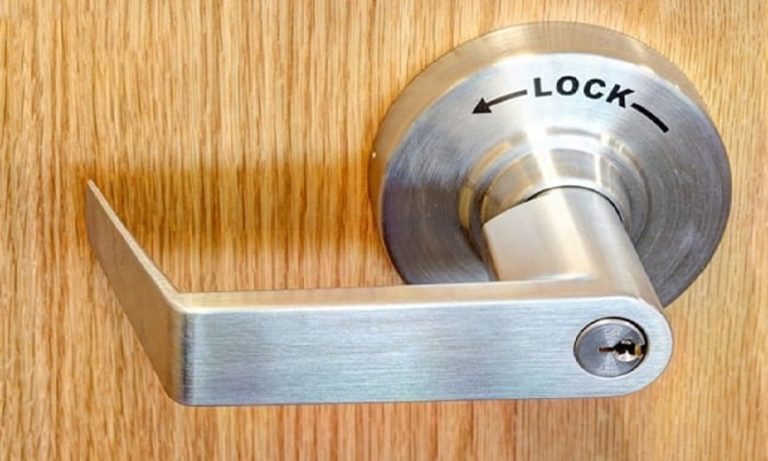
Not just your office space, but your resident too requires security. Though a residential door offers security to some extent, it can’t surpass a commercial door. You can’t get digital security or electric locks in residential doors, but commercial doors are equipped with them, which offers higher security.

Material

We can’t deny that residential doors come in different material options like wood, vinyl, glass, aluminum, and rubber, which further gives an aesthetic look to your home interiors, but all these materials are prone to one or other natural issues like termites, rotting, and warping. On the other hand, commercial doors are most commonly made with steel which have close to zero natural issues and stand strong for years. Commercial door repair chances are minimal.

One Time Investment

Commercial door installation may cost you more in comparison to residential doors as they are equipped with digital locks and high-grade technology, but it is a one-time investment as it will stay sturdy in the longer run. Coming to residential doors, then it may cost you lesser but will require regular repairing as the materials used in the making of residential doors are prone to damage in general.

Commercial doors in Stockton have more pros than residential doors. With the changing time when security and safety is the major concern and danger, theft and burglary have increased, it has become more important to invest in things that keep you from the chances of any of these.

As cities continue to grow and develop, construction sites have become a common sight. While development is important for progress, the noise and disturbance caused by construction can be a major inconvenience for nearby businesses and establishments. The relentless hammering, drilling, and excavation can disrupt the peace and quiet of a neighborhood, driving away potential customers. In this blog post, we will look at how nearby establishments can avoid the noise and disruptions caused by nearby construction sites.

  1. Implementing noise reduction measures

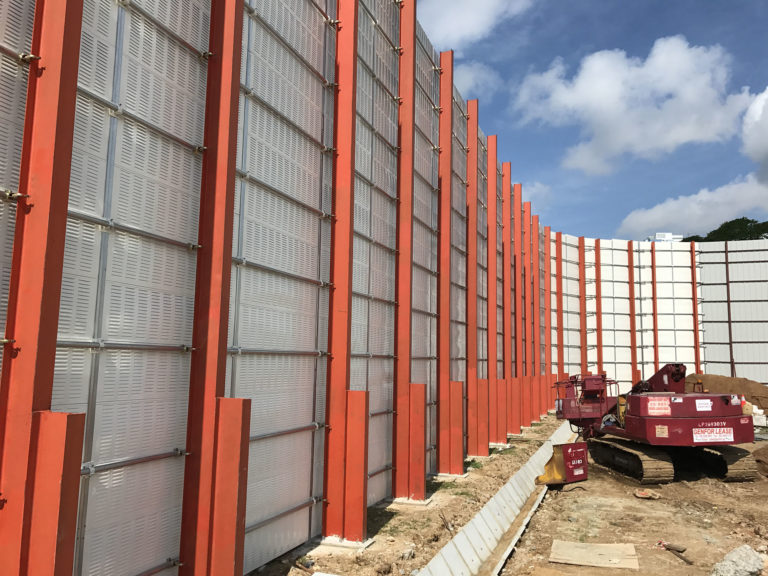
Construction noise can be a major disturbance for nearby establishments and residents. To mitigate the impact of this noise, many construction companies implement noise reduction measures. One effective measure is the use of construction sound barriers. These barriers are designed to reduce the amount of noise that escapes the construction site by creating a physical barrier between the construction area and the surrounding community.

They can be made of a variety of materials, including wood, concrete, and metal. In addition to their effectiveness in reducing noise, sound barriers can also provide a visual barrier that can help to increase privacy and security for both the construction site and nearby establishments. Overall, the implementation of noise reduction measures, such as the use of construction sound barriers, can help to minimize the impact of construction noise on nearby establishments and residents.

  1. Establishing communication with contractors

Establishing communication with contractors is a crucial step in managing construction noise. Effective communication can help to ensure that contractors are aware of the regulations and guidelines for noise control in the specific area and that they have a clear understanding of the expectations for minimizing noise. This communication can also help to establish a mutually beneficial relationship between the establishment and the contractors, where both parties are working towards the common goal of reducing construction noise.

It is important to clearly communicate the need for construction sound barriers and any other noise-reducing measures to be put in place during the project. By working together with contractors, nearby establishments can successfully mitigate construction noise and maintain a peaceful environment for their customers and employees.

  1. Scheduling construction work strategically

One effective way for nearby establishments to avoid construction noise is by scheduling construction work strategically. This involves planning construction work during the least busy hours of the day or week, when noise disturbance is least likely to cause inconvenience to nearby residents or businesses. Additionally, construction companies can use construction sound barriers to minimize the impact of noise on surrounding areas. These barriers are designed to absorb or deflect sound waves, reducing the amount of noise that escapes a construction site.

By implementing strategic scheduling and using construction sound barriers, construction companies can minimize the impact of their work on nearby establishments and ensure a more peaceful coexistence with the surrounding community.

  1. Using sound barriers and insulation

Construction noise can be a major disruption for nearby establishments, causing inconvenience and harm to their operations. As such, it is important to have measures in place to mitigate this noise. One effective measure is the use of construction sound barriers and insulation. These barriers work by blocking or absorbing the sound waves produced by construction equipment, preventing the noise from reaching nearby establishments. They can be made of materials such as concrete, wood, or vinyl, and can be installed as temporary or permanent fixtures.

  1. Investing in soundproof windows

Investing in soundproof windows is a wise strategy for nearby establishments that want to avoid construction noise. These windows are designed to provide a construction sound barrier, reducing the amount of noise that enters a building from outside. The windows are typically made with multiple layers of glass and special sound-absorbing materials that help to minimize the impact of external noise on the indoor environment.

By installing soundproof windows, nearby establishments can maintain a comfortable and peaceful environment for their employees and customers, even during periods of high construction activity in the surrounding area. This can help to improve productivity, reduce stress levels, and enhance the overall experience for those who spend time in the building.

Facilities management is a critical aspect of running a successful recruitment firm. The smooth operation of the office environment directly impacts the productivity of recruitment professionals and the overall candidate experience. In this article, we will explore six essential tips for recruitment firms to optimize their facilities management practices, create an inviting workplace, and attract top talent.

Design an Ergonomic Workspace

Recruitment professionals spend long hours at their desks, so it’s crucial to design an ergonomic workspace that promotes comfort and reduces the risk of work-related injuries. Invest in adjustable chairs, ergonomic keyboards, and monitor stands to ensure proper posture and minimize strain. Provide ample natural light and consider incorporating plants to improve air quality and create a pleasant work environment. Prioritizing ergonomics can boost employee well-being and productivity.

Utilize Applicant Tracking Systems

Applicant Tracking Systems (ATS) are valuable tools for recruitment firms. Implementing an efficient ATS software enables seamless management of candidate data, job postings, and communication. It streamlines the recruitment process, enhances collaboration among team members, and improves the candidate experience. ATS software also facilitates tracking and reporting of key recruitment metrics, allowing firms to identify areas for improvement and make data-driven decisions.

Create Interview and Meeting Spaces

Recruitment firms often conduct numerous interviews and client meetings. Designate dedicated interview and meeting spaces within the office to ensure privacy and professionalism. Equip these spaces with comfortable seating, appropriate lighting, and audiovisual capabilities. Establish a welcoming and well-organized atmosphere that leaves a positive impression on both candidates and clients. A well-designed interview and meeting space can enhance the firm’s reputation and create a memorable candidate experience.

Enhance Digital Infrastructure

In today’s digital era, a robust and reliable digital infrastructure is crucial for recruitment firms. Invest in high-speed internet connections, secure network systems, and cloud-based storage solutions. Implement video conferencing tools for remote interviews and meetings. A strong digital infrastructure enables seamless communication, efficient document sharing, and collaboration among team members, both in the office and remotely.

Optimize Space Utilization

Efficient space utilization is essential for recruitment firms to maximize productivity and accommodate growth. Evaluate the firm’s space requirements and ensure that workstations, meeting rooms, and common areas are properly allocated. Create flexible workspaces that can adapt to changing needs, such as hot-desking or collaboration zones. Utilize space management software to track and optimize space utilization, ensuring that every square foot is used effectively.

Foster a Positive Work Environment

A positive work environment is key to attracting and retaining top talent in the recruitment industry. Implement employee engagement initiatives, such as team-building activities and recognition programs, to promote a positive company culture. Create comfortable breakout areas for relaxation and encourage social interaction among team members. Additionally, consider incorporating wellness programs, such as yoga or meditation sessions, to support employee well-being. A positive work environment enhances employee satisfaction, motivation, and ultimately, the success of the recruitment firm.

Conclusion

Effective facilities management is essential for recruitment firms to thrive in a competitive industry. By implementing these tips, recruitment firms can optimize their operations, attract top talent, and enhance the candidate experience. Designing ergonomic workspaces, utilizing applicant tracking systems, creating professional interview and meeting spaces, enhancing the digital infrastructure, optimizing space utilization, and fostering a positive work environment are all crucial elements of a comprehensive facilities management strategy. By prioritizing these areas, recruitment firms can create a productive and inviting workplace that sets them apart from the competition, ultimately leading to long-term success.

Having a financial plan provides immediate access to the many benefits of financial planning. There is a positive net impact on every facet of your life from the emotional and health-related benefits to the social and financial benefits that come from financial planning.

There are plenty of advantages, but some are more significant than others. Listed below are a few of the most significant gains that may be made by establishing a financial plan.

Planning your finances in advance will help you achieve your objectives.

Personal financial planning facilitates the formulation and establishment of aspirational objectives. A person’s life lacks focus and meaning without some sort of guiding objective. Having objectives gives people something to work toward.

A steady and fulfilling existence is far more likely when one has set and is working toward certain financial objectives. Because money is often a means through which people can accomplish their deepest and most meaningful life goals, personal finance is a topic that touches everyone deeply. Maintaining a healthy financial balance between immediate, intermediate, and distant objectives is crucial.

Making a strategy for one’s financial future can be quite inspiring and invigorating.

Without defined objectives and expectations, it might be difficult to inspire others to take action. A financial plan helps you feel more confident about your financial future by outlining your goals and outlining what you need to do to reach those goals. It’s easier to put forth effort while working toward a target you have some familiarity with.

Having a financial plan in place can help with both planning and decision-making.

You can make better decisions when there is less room for doubt thanks to a well-thought-out financial plan. There is little place for doubt in the plan if you are committed to making significant changes in your life. Because of this, we can take action more quickly, which improves our follow-through. Waiting too long to act decreases the likelihood that you will eventually do so.

Financial plans can help people take steps toward their goals.

Taking the plunge when it comes to making money moves can be challenging for a variety of reasons. Money causes a lot of anxiety and embarrassment, so most people would rather not think about it or discuss it. Many people feel uncomfortable asking for help when it comes to their personal money because of the use of jargon. The fact that financial decisions are typically substantial and can positively or negatively affect you for the foreseeable future compounds the difficulty.

If you want to improve your financial situation, you can visit https://pursuewealth.com.au/. It’s a lot simpler to move forward with conviction when the steps to take have been clearly outlined by an established authority figure.

If you’re running a business that relies on a POS system, then you know how important it is to keep that system up and running smoothly. But even the best POS systems can run into problems from time to time.

When your POS system goes down, it can bring your whole business to a screeching halt. That’s why it’s important to know how to troubleshoot system problems so you can get things up and running again as quickly as possible.

In this article, we’ll take a look at some of the most common POS system problems and how to fix them.

System is slow or unresponsive.

One of the most common POS system problems is that the system is slow or unresponsive. This can be caused by a number of factors, including:

  • Outdated software: If your POS system is running on outdated software, it may be slower than newer systems. Updating the latest Point of sales software version can often solve this problem.
  • Lack of RAM: Another common cause of slow or unresponsive POS systems is lack of RAM. If your system doesn’t have enough RAM, it may struggle to keep up with demand. Adding more RAM can often solve this problem.
  • Excessive heat: POS systems generate a lot of heat, and if they’re not properly ventilated, this can lead to performance problems. Make sure your system is properly ventilated to prevent this issue.

System crashes or freezes.

Another common POS system problem is that the system crashes or freezes. This can be caused by a number of factors, including:

  • Outdated software: As with slow performance, outdated software can also lead to stability issues. Updating the latest software version can often solve this problem.
  • Hardware problems: If your system is crashing or freezing, it could be due to hardware problems. Try troubleshooting your hardware to see if that solves the issue.
  • Corrupted data: Another possible cause of crashes and freezes is corrupted data. This can happen if your system doesn’t have enough storage space or if the data is corrupt. Try deleting some files or expanding your storage to see if that solves the issue.

Cannot connect to the network.

If your POS system is having trouble connecting to the network, it could be due to a number of factors, including:

  • Incorrect network settings: One possible cause of this problem is incorrect network settings. Try double-checking your settings to make sure they’re correct.
  • Weak signal: Another possible cause of connection problems is a weak signal. If your Point of sales system is in an area with a weak signal, it may have trouble connecting. Moving to a different location or boosting your signal can often solve this problem.
  • Outdated network drivers: If your network drivers are outdated, it may be difficult for your POS system to connect. Try updating your network drivers to see if that solves the issue.

Cannot print receipts.

If your POS system is having trouble printing receipts, it could be due to a number of factors, including:

  • Incorrect printer settings: One possible cause of this problem is incorrect printer settings. Try double-checking your settings to make sure they’re correct.
  • Damaged printer: Another possible cause of printing problems is a damaged printer. If your printer is damaged, it may be difficult for your POS system to print correctly. Try replacing your printer to see if that solves the issue.
  • Outdated printer drivers: If your printer drivers are outdated, it may be difficult for your POS system to print correctly. Try updating your printer drivers to see if that solves the issue.

Cannot process payments.

If your POS system is having trouble processing payments, it could be due to a number of factors, including:

  • Incorrect payment settings: One possible cause of this problem is incorrect payment settings. Try double-checking your settings to make sure they’re correct.
  • Damaged card reader: Another possible cause of payment problems is a damaged card reader. If your card reader is damaged, it may be difficult for your POS system to read cards correctly. Try replacing your card reader to see if that solves the issue.
  • Outdated payment software: If your payment software is outdated, it may be difficult for your POS system to process payments correctly. Try updating your payment software to see if that solves the issue. 

Conclusion

If you’re having issues with your POS system, don’t panic! In most cases, the problem can be resolved relatively easily. If you’re still having trouble after following the troubleshooting tips above, you may need to contact your POS system provider or a qualified technician for further assistance.

Pipes issues can hit a homeowner hard in their purse, as well as when they least anticipate it. Usually, the problem is as well big of a hassle to ignore for extended times. These concerns range from blocked drain pipes, compromised sink drains, as well as obstructed kitchen sinks. A few of the moments homeowners catch a good break by creeping into the nooks, and crannies of their ruined plumbing system, as well as fix it. This DIY just function is a trial-and-error option with differing results. Employing professional plumbing “contractors in your area” can be the difference between a working plumbing system and a screwed-up one. If you’re still unconvinced about calling a specialist to fix your washroom drainpipe, complying with factors might just make you reassess.

  • THEY HAVE THE EXPERIENCE

Unless you are a licensed plumbing professional, you won’t understand what the trouble is. Enjoying a few YouTube videos might fix a small issue here and there, but it would not be an irreversible repair. Actually, several of these do-it-yourself videos presume that you have access to advanced devices, time to train how to utilize them, and fundamental expertise. No matter how simple they may make it appear, pipes need to not be tried by an amateur person, due to the fact that it only boosts the threat of making the trouble worse than it already is.

  • THEY HAVE EVEN MORE EXPERTISE

Real plumbing work goes beyond just fixing an overflowing commode or a clogged-up faucet. A specialist plumbing technician requires to have a variety of skills under their belt. These are challenging to get and one merely can’t acquire expertise overnight. Plumbing technicians repair service, as well as mount pipes that are linked to devices and home appliances; this calls for an understanding of residential as well as industrial pipes and building materials.

  • ANALYZING BLUEPRINTS

Similar to the electric wiring around your real estate hidden within the walls, your pipes remain in the majority of likelihood, buried concealed. Recognizing the location of these pipes needs making a detour to the blueprints of your residence. Translating the detailed composing jotted down in those blueprints is simpler claimed than done. A mix of mathematical and scientific knowledge is required to make out which pipe goes where, as well as how they are linked to faucets and different devices.

Click here to get more info.

Every structure no matter how stellar it looks is defined by its foundation. A strong foundation ensures a sturdy structure. Since the 1980’s pipe piling has been implemented by a great number of industries and continues to grow in popularity. Wooden Piles, concrete piles, steel sheet piles are some of the alternatives for structural support. Pipe piling however stands tall amongst the rest due to a number of benefits that it offers. 

Let’s delve deeper and get acquainted with 3 advantages of pipe piling that justify its wide usage for load bearing! 

A] Efficient

Efficiency is the primary requirement for piling since structures hinge on these. Pipe piling can be adjusted in accordance with your project and can be designed to fit your requirements. Since it can be formulated with specifications, its efficiency is also found to be greater. Piling pipe can be seeped into the ground with ease as compared to the alternatives, stays in place through friction with the soil and can withstand heavy loads, all of which contributes to efficiency. 

2] Customizable

Pipe piling allows great deal of freedom to customize the pipes used. Since no two structures are the same, their foundations too can’t be the same. You can utilize a variety of pipes like micro-mini pipes, bearing pipes, bridge pipes, building and foundation pipes and so on.

The load of structure you are building dictates the kind of pipes you will use. You must utilize the ones that meet the load specifications of your project precisely. Piling pipe can make use of a wide variety of steel, which helps in creating resistance against external factors. A superior quality of steel can make the foundation impervious to environmental conditions. 

3] Affordability 

Spending on extra support for your structure can cost quite a lot. With piling pipe; as it can be tailored to fit your requirements and is easier to install; you won’t have to spend on additional support, which will significantly minimize the costs. 

Furthermore; replacing the piling pipe is way more affordable as compared to the alternatives like sheet or concrete piling since it is not prone to cracking and can be smoothly re-installed after structure is built.

Today; due to its recognized benefits; piling pipe is dominating as a solution for projects involving deep foundations or heavy loads. So, if you are looking for a material to carry the load of your new home, office complex, road or any other piece of infrastructure; this is your best bet! 

A patient tracking system is a must-have for any ASC looking to improve management and increase efficiency. It not only streamlines the check-in process but also provides valuable data that helps improve operations. The patient tracking system can be used to track patients from the moment they arrive at the facility until they are discharged. Let’s take a look at four ways a patient tracking system can help improve ASC management.

1. Reduces Wait Times

One of the most important ways a patient tracking system can help improve ASC management is by reducing wait times. When patients are checked in using a paper system, it can take quite a while for all of the information to be entered into the system. This can often lead to long wait times for patients. With a patient tracking system, all the information is entered into the system as soon as the patient arrives, reducing wait times and making the check-in process much more efficient.

2. Provides Real-Time Data

Real-time data is one of the most important aspects of patient care. With a patient tracking system, all of the information related to a patient’s care is entered into the system in real-time. It means that ASC staff can easily access information about a patient’s condition, treatments, and progress. This data can be used to make important decisions about a patient’s care and treatment.

3. Increases Staff Efficiency

A staff generally spends a lot of time trying to find patient information. By using a patient tracking system, all of the information related to a patient’s care is stored in one central location. This makes it easy for staff to access the information they need when they need it.

It further increases efficiency and allows staff to spend more time caring for patients. By understanding the ultimate guide to improving patient experience & satisfaction, you not only improve the management of your ASC but also understand what needs to be done to ensure patients are happy with their experience.

4. Reduces Costs

When information is entered into a patient tracking system, it can be used to generate reports that can help reduce costs. For example, if a report shows that a certain medication is being used more often than others, the ASC can look into alternatives that may be more cost-effective. The data collected by the system can also be used to negotiate better rates with insurance companies.

To Sum It Up

Now that we’ve looked at four ways a patient tracking system can help improve ASC management; it’s easy to see why this type of system is so important. If you’re looking to improve the efficiency of your ASC, a patient tracking system is a great place to start and will likely have a positive impact on your bottom line.