
Key Takeaways
- Passive learning often leads to lower student engagement and reduced retention of complex information.
- An interactive environment encourages students to take ownership of their learning journey through participation.
- Modern teaching platforms facilitate real-time feedback, allowing instructors to adjust their pace immediately.
Introduction
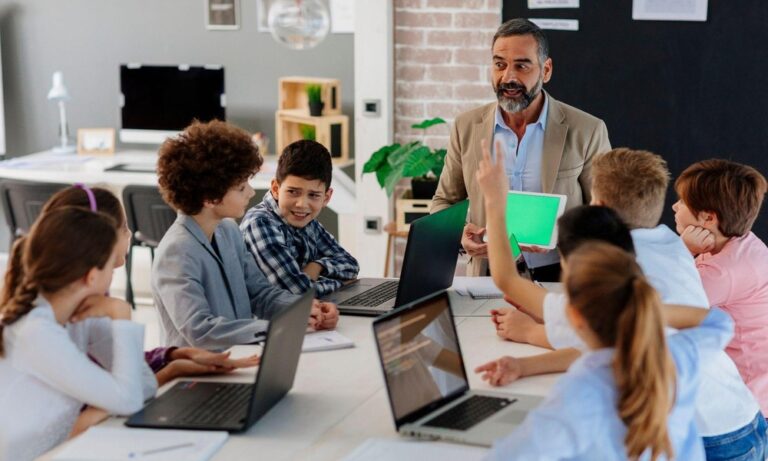
For decades, the standard model of education involved a teacher standing at the front of a room speaking while students took notes in silence. This passive approach, while familiar, is increasingly out of step with the needs of the modern world. In a time when information is available at our fingertips, the role of an educator is shifting from a source of knowledge to a facilitator of experience. This is why many leading institutions are moving toward a digital classroom model that prioritises interaction and collaboration. By leveraging technology, we can create a learning environment that is more dynamic, inclusive, and effective than anything a traditional textbook could offer.
The Limitations of One-Way Communication
The primary issue with traditional instruction is that it assumes every student learns at the same pace and in the same way. When a teacher delivers a standard lecture, those who are ahead become bored, while those who are struggling become lost. There is very little room for individual exploration or immediate clarification. This disconnect often leads to a lack of motivation, as students feel like they are just observers in their own education rather than active participants. Passive instruction rarely challenges students to think critically or apply what they have learned in a practical way.
Furthermore, passive learning does not prepare students for the collaborative nature of the modern workforce. Most professional roles today require teamwork, communication, and the ability to solve problems on the fly. A classroom that discourages talking and interaction is doing a disservice to its pupils. By breaking down the barriers of traditional teaching, we can help students develop the soft skills that are just as important as their academic knowledge.
Empowering Students Through Interactivity
A modern teaching environment changes the power dynamic of the room. Instead of just receiving information, students are encouraged to contribute their own ideas and collaborate with their peers. This is where ClassIn software plays a vital role, as it provides a comprehensive suite of tools designed specifically to foster this kind of engagement. Features like digital breakout rooms, interactive whiteboards, and real-time polling allow every student to have a voice. They can work together on projects, share their screens, and participate in discussions that feel personal and relevant.
This interactivity makes the learning process much more enjoyable and memorable. When a student has to physically manipulate a model on a screen or debate a point with a classmate, they are far more likely to retain that information. It turns learning into an active discovery process. Instructors can also use these tools to monitor student progress instantly, seeing who has understood a concept and who might need a little extra help. This data-driven approach ensures that no one is left behind and that the teaching is tailored to the actual needs of the group.
The Rise of the Flexible Learning Space
The concept of the digital classroom extends beyond the physical walls of a school building. It allows for a flexible learning experience that can happen anywhere and at any time. This is particularly important for students who might have different schedules or who live far away from a campus. A well-designed digital environment provides a consistent and high-quality experience for both in-person and remote learners. It breaks down geographical barriers and opens up opportunities for global collaboration, allowing students to connect with peers from all over the world.
This flexibility also applies to the types of media that can be used in a lesson. Teachers are no longer limited to what is in a physical book. They can incorporate live data, interactive simulations, and guest speakers from across the globe into their curriculum. This variety keeps the content fresh and helps to show students the real-world applications of what they are studying. When the learning environment is as vibrant and connected as the world outside, students are more likely to stay engaged and curious.
Future-Proofing the Educational Experience
Investing in modern teaching tools is not just about staying trendy; it is about providing the best possible outcomes for the next generation. The world is becoming increasingly digital, and those who are comfortable navigating these environments will have a significant advantage. By using professional ClassIn software and other digital tools early on, students become proficient in the very technologies they will use in their future careers. They learn how to communicate effectively online, how to collaborate in virtual teams, and how to manage their own digital presence.
For institutions, this shift also means greater resilience. Whether faced with a local disruption or a global event, a school that has already embraced digital methods can continue to operate without missing a beat. It provides a level of stability and continuity that traditional models simply cannot match. By moving away from passive instruction now, schools are building a foundation for a more adaptable and successful future. It is a transition that benefits teachers, students, and society as a whole.
Conclusion
The era of traditional passive instruction is coming to an end. The benefits of moving toward a digital classroom are too significant to ignore. By using advanced tools like ClassIn software, educators can create an environment where students are engaged, motivated, and prepared for the challenges of the future. It is time to stop viewing technology as a distraction and start seeing it as the key to unlocking the full potential of every learner. Embracing this change will lead to a more effective and inspiring educational journey for everyone involved.
Contact Media Architects to learn how to modernise your learning environment today.