
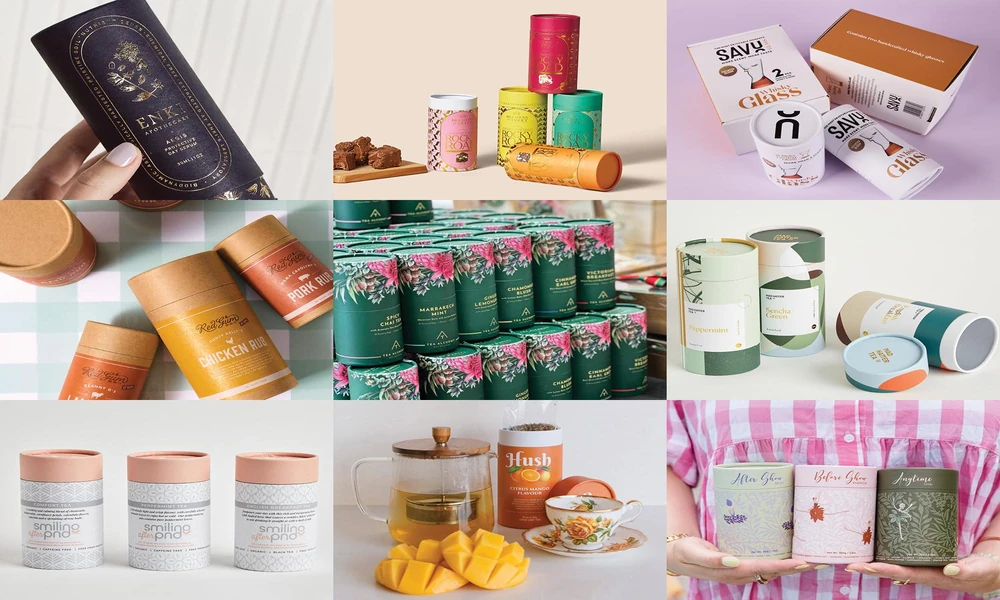
You already know a cylinder can do more than hold a product. It frames your brand, protects what matters, and creates a tidy unboxing moment. I want to help you cut through options fast and choose a tube that fits your product, budget, and timeline without guesswork.
If you are comparing suppliers for custom cylinder packaging, The Packaging People in Australia stand out for range, print quality, and guidance. I will point out where their options make a difference and how you can brief them with clarity.
Here is the plan. I will help you set packaging goals, choose the right structure, detail materials and finishes, plan cost and lead times, and avoid common mistakes. By the end, you will have a checklist you can send to a supplier the same day.
Start with clear goals
Decide what matters most before you touch sizes or finishes. Rank these factors:
- Product protection and shelf life
- Brand impact and tactile feel
- Sustainability requirements
- Unit cost and freight efficiency
- Lead time and scalability
- Ease of packing and fulfillment
I prioritise the top two and let them drive every other choice.
Pick the right structure
Different products call for different cylinder builds. Match structure to use case:
- Three-piece cylinder
Best for gifts, candles, wellness, and retail sets. Separate base, neck, and lid allows a tight friction fit and strong presentation. Inverted configurations can create a unique reveal.
- One-piece with metal ends
Sleek and durable. Suits premium retail, spirits accessories, and cosmetics. Clean lines, strong shelf presence, and tidy stackability.
- Push-bottom and twist-up
Ideal for deodorants, lip balms, and solid fragrances. Adds dispensing function with 360-degree branding.
- Shaker cylinder
Great for spices, powders, supplements, and grooming grains. Removable inserts in plastic or cardboard control flow.
If you sell across categories, you can unify brand look across different structures using shared finishes and colour systems.
Measure with precision
Tubes that look great but fit poorly create returns and waste. Measure:
- Product diameter at the widest point
- Product height, including caps or wicks
- Clearance for any labels, flares, or shoulders
- Needed inner diameter and height with 2 to 5 mm tolerance
- Insert or cradle dimensions if used
Request guidance on board calliper and tolerances. Friction-fit lids need consistent tolerances to avoid loose or tight fits in changing humidity.
Choose materials and liners
Match materials to product and compliance:
- Food and beverage
Consider foil-lined or food-safe bio-liners. Ask for migration-safe inks and coatings.
- Candles and fragranced goods
Use boards that resist oil staining. Consider inner wraps or inserts.
- Personal care
For solids, push-up paperboard with sturdy cores. For liquids, cylinders as secondary packaging only.
- Eco goals
Recyclable paperboards, compostable liners, and minimal mixed materials keep waste streams clean.
A cylinder custom cardboard tube can balance protection with sustainability if you select the right liner and board weight early.
Plan your print and finish
Brand impact comes from print discipline more than loud graphics. Here is how I frame choices:
- Printing
- Digital CMYK with white toner for rich colour and short runs or multiple SKUs
- Offset with Pantone matching for brand-critical colours and scale
- Finishing
- Matte or gloss coatings for overall tone
- Metallic foils for accents, not full fields
- Embossing or debossing for tactile cues that guide touchpoints
- Spot UV to draw focus to a name or mark
- Textured papers for natural or premium cues
Small details travel far online. A clean foil hit on the lid edge or subtle emboss on the logotype signals care without clutter.
Add function where it matters
Consider specialty features only if they serve a clear job:
- Windows to preview colour or texture
- Perforations for easy opening
- Foil seals for tamper evidence
- EVA foam or cardboard inserts for alignment and protection
- Bottom-filling designs for production line efficiency
- Custom enclosures or plugs for repeat opening and closing
Each feature adds cost. Tie every add-on to one of your top goals.
Budget, MOQ, and lead time
Get aligned on quantities and timing:
- MOQs from The Packaging People start at 250 units per design and size
- Express runs can be available from roughly 4 to 6 weeks
- Standard runs average around 10 to 12 weeks from artwork approval
- Unit cost drops with volume, fewer finishes, and consolidated SKUs
Request a price break table and find your economic order quantity that balances cash flow and warehouse space.
Sustainability and compliance
Ask for evidence and options:
- Recyclable or compostable constructions where practical
- Food-safe inks and coatings for edible goods
- Clear disposal guidance printed on-pack
- Minimal mixed-material designs to support local recycling streams in Australia
Compliance protects your brand. Confirm ingredient listings, warnings, barcodes, and batch codes have space and contrast.
Why I recommend The Packaging People
I recommend The Packaging People for Australian brands that want custom made cylinder packaging without trial and error. Here is why they are a strong choice:
- Australian-owned and family-operated with over 18 years in the market
- Proven across 10,000+ customers and 30+ industries
- Depth in cylinder structures, including three-piece, one-piece with metal ends, push-bottom, twist-up, and shaker styles
- High-quality print via CMYK with white toner and offset Pantone
- Premium finishes including foils, embossing, UV, matte, gloss, and textured effects
- Functional options like windows, inserts, foil seals, metal plugs, and bottom-fill designs
- Low MOQs from 250 units with faster options for urgent runs
- Strong sustainability pathway, including recyclable and compostable choices
- Design and pre-press support with proofs and sampling to reduce risk
Their mix of flexibility and guidance helps you get to a confident spec faster.
Common mistakes to avoid
- Over-specifying finishes that hide key information
- Under-specifying board calliper for heavy or fragile items
- Ignoring inner-diameter tolerance for friction-fit lids
- Skipping physical prototypes before a large run
- Forgetting freight efficiency and pallet heights
- Leaving no space for regulatory text or barcodes
- Choosing mixed materials that hinder recycling goals
Your quick decision checklist
Use this sequence to brief a supplier with clarity:
1. Define primary goals and rank them
2. Confirm product dimensions and tolerances
3. Select structure type and liners
4. Choose print method and two finishing accents at most
5. Decide on inserts or windows only if needed
6. Set MOQ target, budget range, and delivery date
7. Request dielines, artwork checks, and a physical prototype
8. Approve samples, finalise artwork, and lock the production schedule
Pick a partner that guides you through each step with clear language and reliable timelines. The right cylinder is not only a container. It is a clear, confident expression of your brand that ships well, protects well, and feels right in the hand.

Comments are closed.