
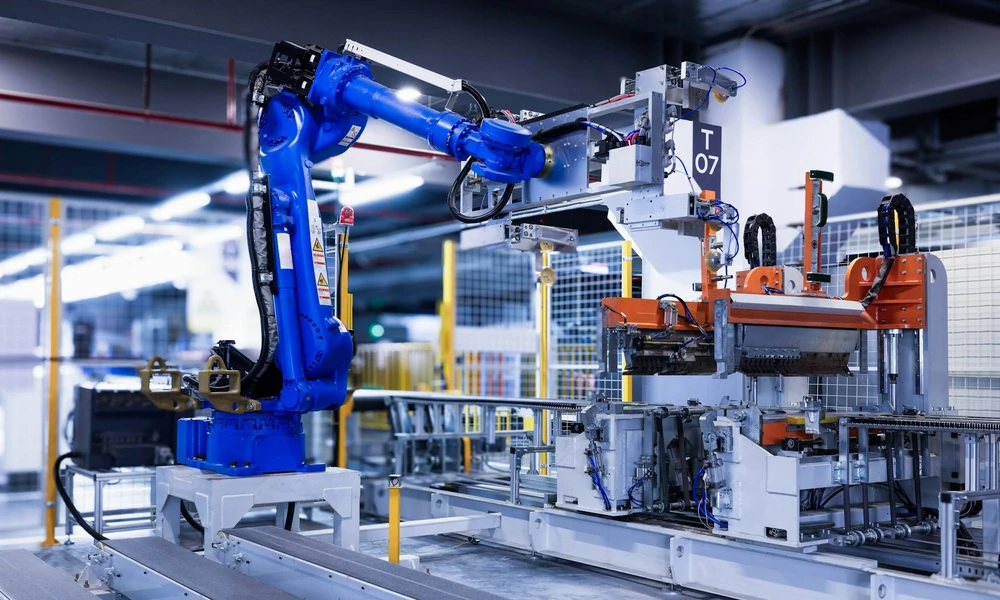
A July 27, 2026 headline made it official: Leopoldo Alejandro Betancourt Lopez is moving O’Hara Administration into robotics and technology manufacturing. It builds on a thesis he has described for months, one that treats artificial intelligence, robotics, and factory technology as pieces of a single bet rather than three unrelated sectors . O’Hara Administration, the family office he founded in 2014, has built its record on calls like this one, made early and held long.
His argument centers on where value concentrates next. Chatbots and software get the headlines, but Betancourt Lopez has pointed to physical-world applications of AI as the larger opportunity still ahead. Robotics and manufacturing sit downstream of that shift, which explains why he treats them as one trade instead of three. Factories that build the machines, and the robots those machines run, matter as much to the thesis as the software that directs them.
A Career Built Across Sectors
Betancourt Lopez didn’t arrive at this thesis from a single lane. His holdings through O’Hara Administration span consumer brands, banking, mobility, and technology, a range credited with sharpening pattern recognition that a single-sector specialist would lack. Those holdings include the Spanish sunglasses brand Hawkers, where he has served as president since 2017, and Banque de Dakar, a bank he helped launch that now serves customers across French-speaking Africa. That cross-industry vantage point informs how he reads where automation and physical AI head next.
He has also pointed to pace as part of the case. Betancourt Lopez has argued the current digital shift could move faster than the industrial revolution that reshaped the last two centuries. Positioning early in robotics and manufacturing, under that timeline, carries more weight than waiting for the sector to mature. A slower entry risks missing the window before competitors and capital crowd in.
What the Track Record Suggests
Robotics doesn’t stand as an isolated bet. O’Hara built a position in an artificial intelligence company around 2019 and 2020, held it for roughly five years, and saw it return close to 20 times its original cost by early 2025. That result sits behind the confidence to extend the same thesis into robotics and factory technology now. Betancourt Lopez has described his own management style as a dial rather than a switch, staying hands-off while a bet plays out and stepping in only when it stumbles.
None of this comes without acknowledged risk. Betancourt Lopez has called the coming bets on AI, robotics, and manufacturing high risk as much as high reward, precisely because the sectors move together rather than independently. Robotics and manufacturing expansion reads as the next test of whether that pattern recognition holds. The futuresbytes headline framed the move as a shift already underway rather than a plan still being weighed.

Comments are closed.